
I: building The Curiosity Habit
Ask More, talk less
The Leadership Shift
From Fixing to Exploring
From Telling to Asking
From Rescuing to Building Ownership
From Providing the Answer to Clarifying
Key Principle
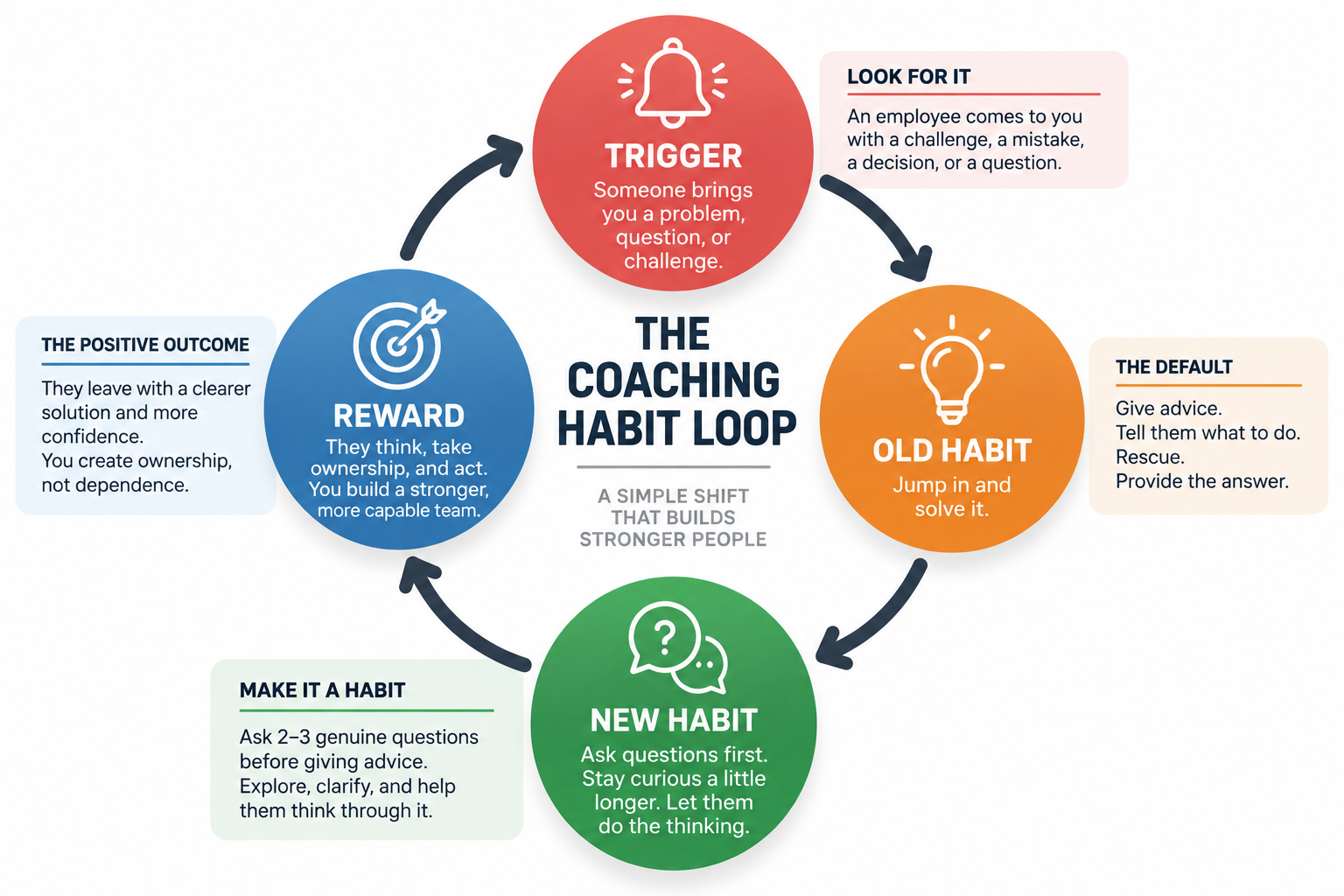
Stay curious a little longer. Rush to action and advise a little slower.
Core Idea
Great coaching is not about having the best answers. It is about helping people think, take ownership, and solve more of their own problems.
Why It Matters
Leaders often become bottlenecks because people bring them problems and they immediately provide solutions. The goal is to build a new habit: stay curious longer and delay advice.
The First Coaching Skill
Before giving advice, ask at least two genuine questions.
Leadership Cues
What am I tempted to solve for them?
What could I ask instead?
Am I helping them think or teaching them to depend on me?
II: Finding the right questions
Ask Better Questions. Create Better Thinkers.
The goal of coaching is not to prove that you know the answer. It is to help the other person think more clearly, identify the real challenge, and take ownership of what happens next.
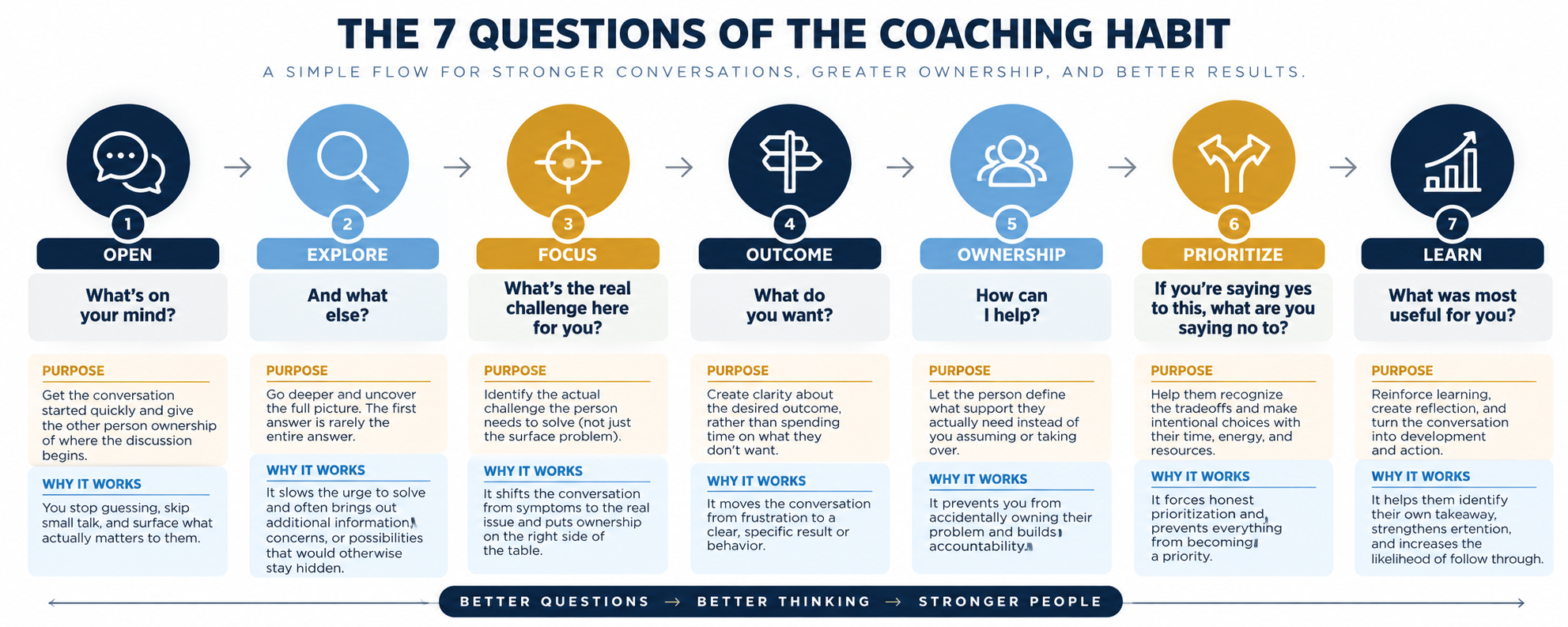
Michael Bungay Stanier's The Coaching Habit provides specific questions that help leaders move a conversation from a vague problem toward clarity, ownership, action, and learning.
Leadership Cues
Don't Turn the Seven Questions Into a Script: You are having a conversation, not conducting an interview. Listen to the answer and use the question that helps the person think more clearly.
Listen Instead of Loading Your Next Question: A leader can ask great questions while still being a terrible listener. Pay attention to what is actually being said instead of mentally preparing your response.
Don't Hide Advice Inside a Question: "Don't you think you should talk to your manager?" is not really a question. It is advice wearing a question mark. Ask genuine questions when you want the other person to think.
Use "And What Else?" Before Solving: When you feel the urge to give an answer, use that feeling as a trigger to stay curious for another minute.
Keep Ownership on the Right Side of the Table: If someone walks into your office owning a problem and walks out while you own it, the coaching conversation failed.
Know When Coaching Ends: Coaching does not mean leaders never give direction. Sometimes the employee needs information, a clear standard, or a decision. Ask enough questions to understand the situation, then provide clarity when leadership requires it.
Immediate Leadership Action Items
Choose Your Three Questions: Select three of the seven questions that you most need to build into your normal leadership conversations.
Practice the AWE Question: For the next week, intentionally ask "And what else?" before advising at least one conversation each day.
Coach One Real Problem: Identify one employee who regularly brings you problems. In your next conversation, resist solving the problem and instead guide them to identify the real challenge and their own next step.
End With Ownership: Before ending a coaching conversation, ask the employee to state what they are going to do next clearly.
Review Your Habit: At the end of the week, ask yourself:
Did I do more thinking than my employee?
Did I give answers they could have discovered themselves?
Did the employee leave with greater clarity?
Did they leave owning the next action?