Class 1: Mindset of a Leader
Understanding the Locus of Control and why the "Why" matters more than the "What."
Leading from “Why” & Mastering Your Locus of Control
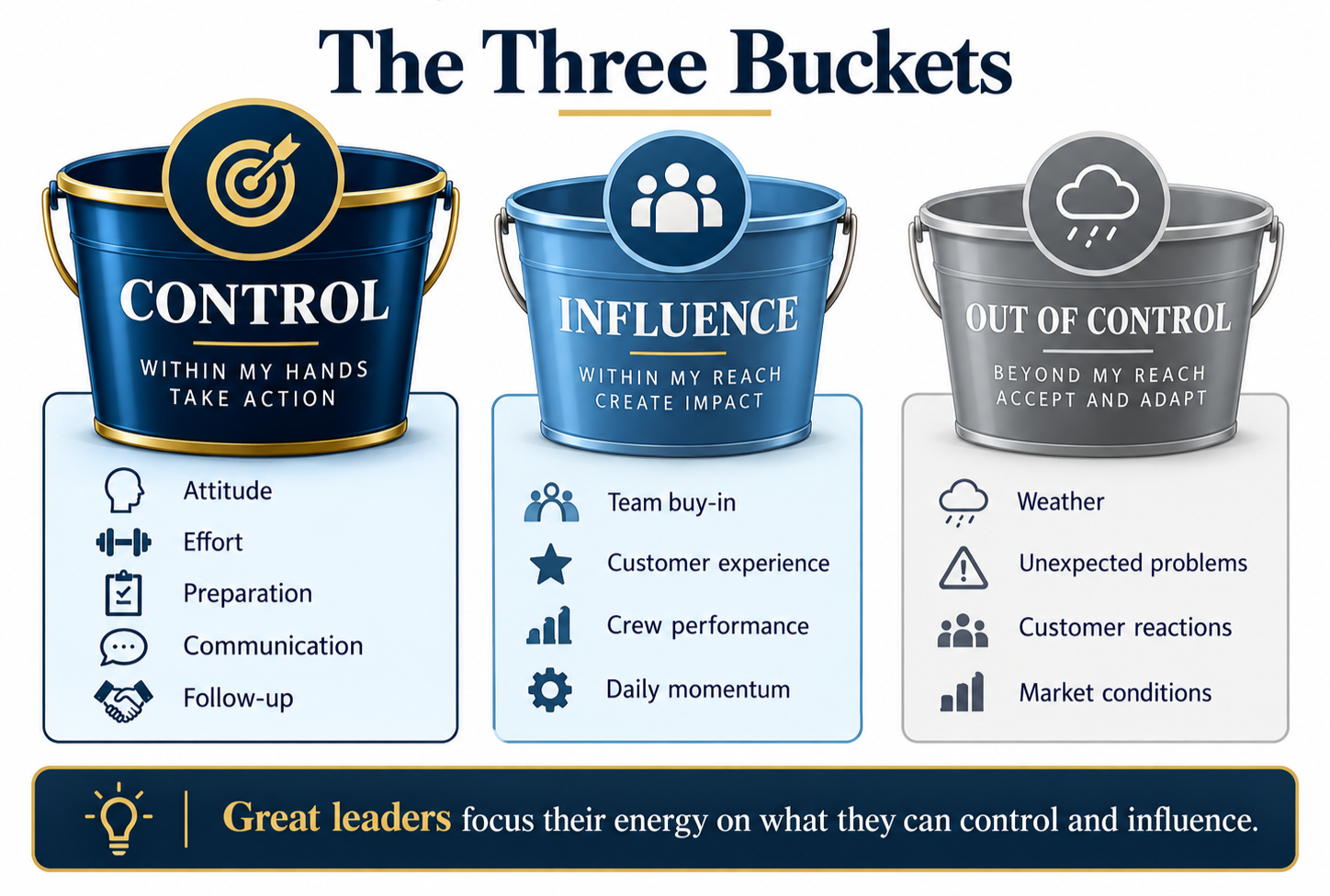
Leadership starts when we stop measuring ourselves only by what we personally accomplish and begin focusing on how we influence the people around us. Strong leaders know why they lead, focus their energy on what they can control, and help their team do the same.
Leading From Your Why
Your “why” is the personal reason you choose to show up, hold the standard, and keep pushing when leadership gets difficult. When that reason is clear, consistency becomes less dependent on your mood or circumstances.
Great leaders also learn what motivates their people. Connecting expectations to someone's goals, family, career, or personal ambitions creates stronger ownership than simply telling them what number to hit.
Leadership Cues
Catch the excuse: When you hear yourself explaining why something couldn't happen, ask, “What could I have controlled or influenced?”
Model it first: Your team will copy how you respond to adversity more than what you tell them about accountability.
Know their why: Leadership becomes easier when you understand what the people you lead are actually working toward.
Immediate Leadership Action Items
Define Your Why: Write down one clear reason why becoming a better leader matters to you.
Run the Three-Bucket Exercise: Take one current challenge and identify what you control, influence, and cannot control.
Learn One Person's Why: Ask one team member what they are working toward personally or professionally and how you can help.
Class 2: People Priority
Learning how to invest your energy where it yields the highest return and believing in people before they prove you right.
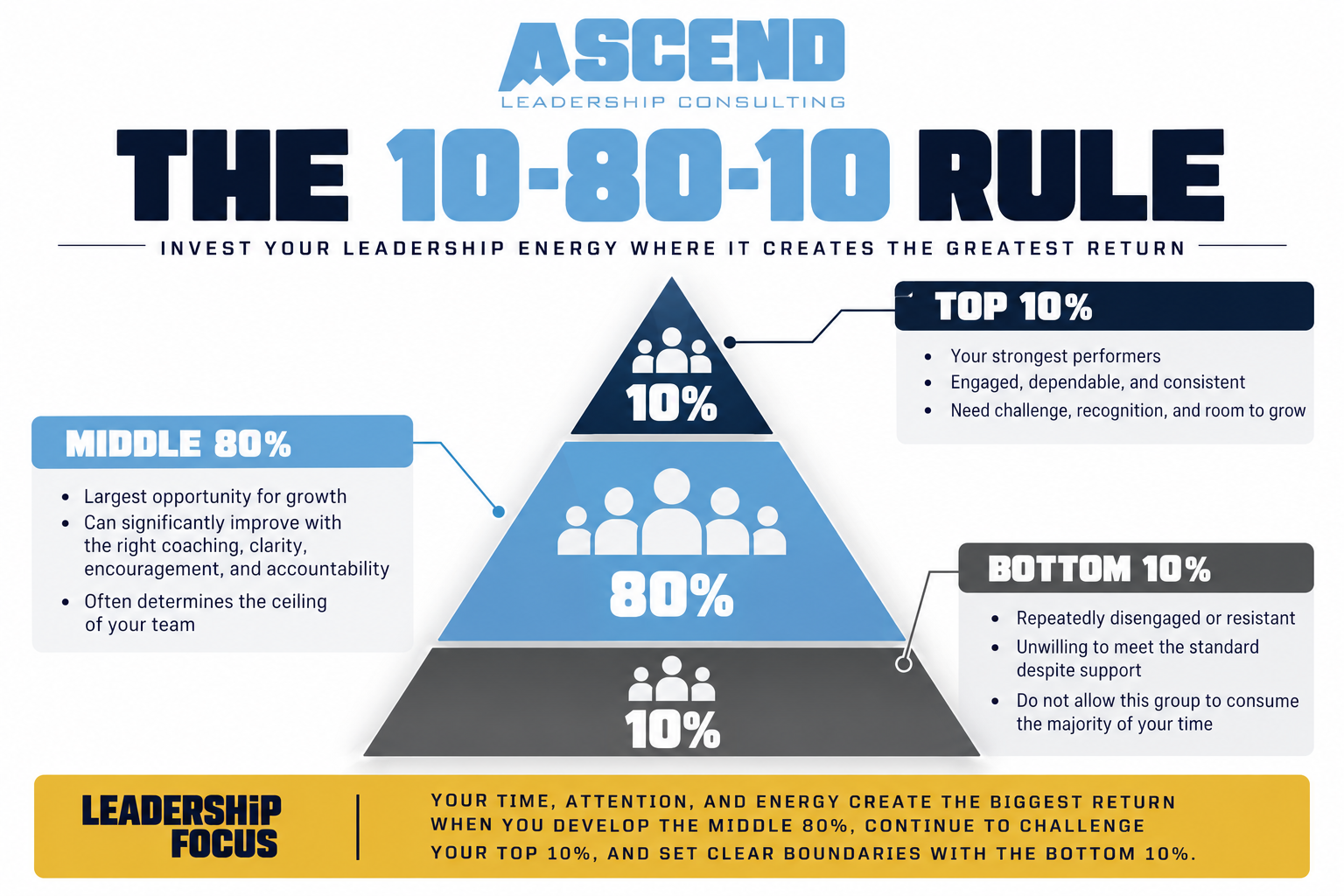
Investing Your Leadership Energy Where It Creates the Greatest Return
Leadership is not about treating every person exactly the same. Strong leaders understand where their time, attention, coaching, and energy will create the most impact—and avoid spending all of it on the people who give the least back.
Class 3: Ownership Habit
Shifting maturity levels. Moving from a reactive "firefighter" to leading accountably for the team’s success.
Class 4: Speaking with Clarity
Using the 3Cs (Courage, Candor, Consideration). Learning how to speak with conviction without losing the team's respect.
Class 5: Running your day
Proactive vs. Reactive planning. Mastering the daily schedule so the day doesn't run you.
Class 6: Accountability rhythm
Building the System of Check-ins. Using routine and structure to ensure nothing falls through the cracks.
Class 7: Winning scorecard
How to define "Winning" for your crew so performance is a visible, daily game.
Class 8: Consistent Standards
The power of Consequences & Consistency. Understanding that what your standards are and how you hold them.
Class 9: Sustainable Climb
How to maintain personal growth, resilience, and fulfillment over the long haul.